Visiting Taipei 101

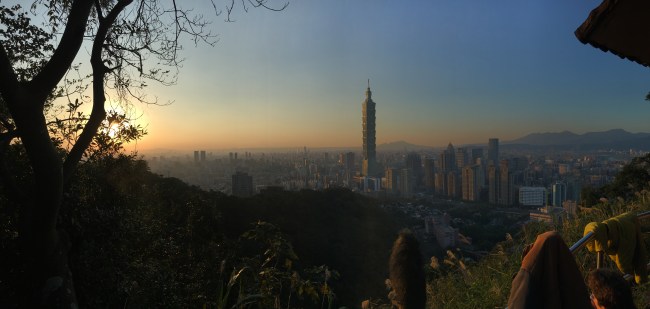
Taipei 101 from Elephant Mountain

When you think about tourist attractions in Taipei, one place literally looms above the rest. The Taipei 101 is the ninth-tallest building in the world (as of April 2016— they always seem to be building bigger ones). The building stretches skyward for 101 floors, with a vertical rise of just over half a kilometer.

In tiny Taipei, where most buildings go no higher than a dozen floors or so,  the 101 dominates the skyline. It is an iconic building, and the citizens of Taiwan and Taipei are rightly proud of it. The Taipei 101 briefly held the record for the world’s tallest building, before it was passed by the Burj Khalifa in Dubai, which holds the record to this day.


131218world5cstallestbuildings2020

The Taipei 101 features an inspired design which incorporates elements of traditional Asian architecture and Chinese culture into the design. The building features a pagoda-style design with eight segments— the pagoda style is a nod to the historic structures, which can be found all over Asia. The number eight is considered lucky in Chinese culture. Several smaller design elements on the outside of the building also nod to Chinese beliefs or superstitions.


Taipei 101 Photo

The coins visible near the base are symbols for prosperity (Chinese people love prosperity)

You have two options for enjoying the Taipei 101 while you’re in Taiwan: visit the observation deck at the top (500 New Taiwan Dollars), or hike Elephant Mountain and view the tower from a scenic viewpoint (free). We did both.

Taipei 101 from Elephant Mountain

Elephant Mountain is an urban hike in Taipei, Taiwan. One of the cooler elements of this city is the urban hiking— you can take the (excellent) metro right to the edge of the city, and be walking in nature within five minutes. It’s an amazing way to escape the hustle and bustle of the city, and catch some great views of the Taipei 101 in the process.
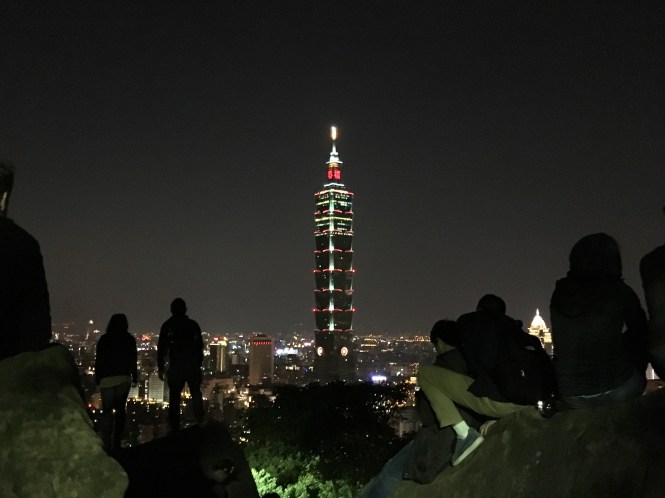
Taipei 101 Elephant Mountain crowds

Since the trail is so easily accessible, don’t expect to be alone— sunset is an especially popular time, with hundreds of tourists and locals making the trip to grab that perfect Instagram photo, or just to watch the city lights slowly come alive.

Processed with VSCOcam with hb2 preset

Don’t let that discourage you though— there’s a reason all those people are there.

Taipei 101 from Elephant Mountain

The endless stairs on the trail are a great workout for out-of-shape travelers, too!

Inside the Taipei 101

Like most skyscrapers, the Taipei 101 is mostly office space. There is a food court in the basement and a luxury mall on the first five floors. After that, it’s restricted offices all the way up to the 88th floor, where there’s an observation deck open to the public.


IMG_1884

Where the tower proper intersects with the luxury mall — neat little architectural trick.

As a general rule, I tend to avoid going to observation decks in skyscrapers – they’re expensive and ultra-touristy – but from first sight I just fell in love with the 101. I had to see the view from the top, even if it was a little expensive (500 New Taiwan Dollars, roughly $15 USD).

Both the 88th and the 89 floors are dedicated to observation decks: the 88th is entirely indoors, while the 89th is an outdoor observation deck. The outdoor observation deck is often closed for weather or high winds, but to be honest, the indoor floor offers much better views. An obnoxious suicide cage obscures much of the view from the outdoor floor.

IMG_1896

The perpetual fog and smog that often covers Taipei can limit the views from the top somewhat.

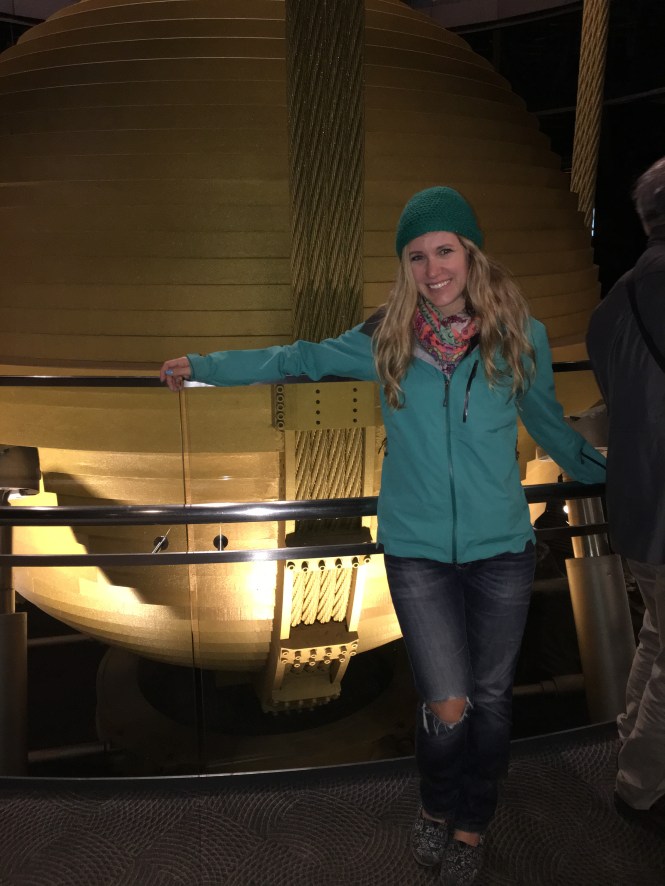
The 87th floor is also open to the public, affording a view of the building’s impressive internal damper, designed to protect the building against high-force winds and the are’a frequent earthquakes. As the only internal building damper open to the public, this is the most unique element of the Taipei 101 observation deck. Very cool to look at and learn about, especially for the engineering and design-minded.
IMG_1901

It’s hard to provide a proper perspective on how big this thing is — it takes up two floors and weighs 600 tons.

IMG_1886

The damper even has its own mascot! You can buy stuffed versions of this guy in the gift shop. I imagine this is the only place in the world where you can buy an anthropomorphic plushie of a tuned mass damper.

The observation deck also has plenty of information about the building, the damper, and the city of Taipei. Most of the exhibits are presented in both Chinese and English, which was very helpful. There’s also an amazing carved coral museum with some truly beautiful sculptures you have to pass through on your way out— just don’t look at the price tags!

IMG_1904

Overall, the 101 is an amazing building. Visiting the Taipei 101 should absolutely be on the list for anyone planning on visiting Taipei. Although it can be a little touristy, it’s well-worth it to visit a world-famous building like this. Just do yourself a favor and don’t eat at the food court— go outside and sample some of Taipei’s famous street-food scene!

IMG_1698.JPG

What Travel Taught Me About My Own Privilege

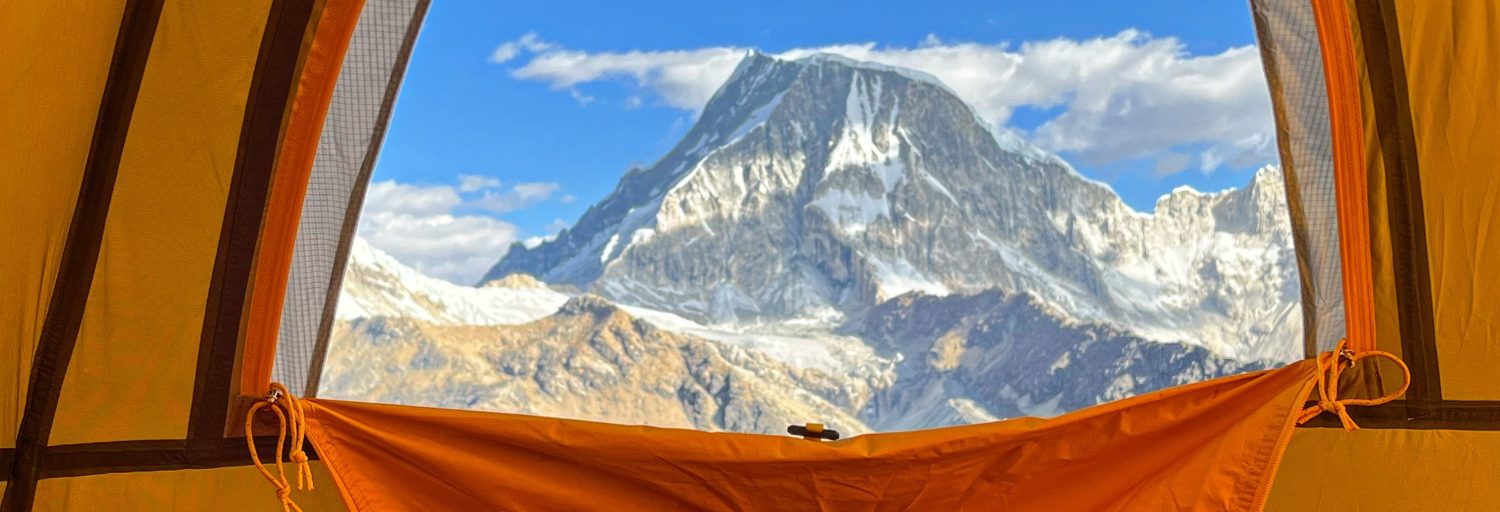
Machupuchre Fistail Mountain

I’ve made more charitable donations in the past five months than the rest of my life, combined.

After a year of hard work, research, and planning, in October, I finally took off to travel the world. I had a few thousand dollars in savings and a stable remote job good for about about $1,000 a month, after taxes.

A good enough budget for Thailand and Bali, but in the grand scheme of things, not a ton of money; a budget which I knew wouldn’t last forever. I thought I’d be pinching my pennies the whole way. I had a lot of places I wanted to see; a lot of things I wanted to do. I worried about how I’d fit it all in.But a funny thing happened after I arrived:

I started to feel guilty

I arrived in Asia a wealthy westerner, and whenever I board the plane home, no matter the contents of my bank account, I’ll still be a wealthy westerner. All around me, I have seen poverty and struggle, contrasted with the extreme wealth of a privileged few. My skin color and my status as a tourist automatically, obviously, placed me in the upper-class bucket here. But as I kicked that idea around, I began realizing the huge extent of the privilege I enjoyed even at home, in the United States.

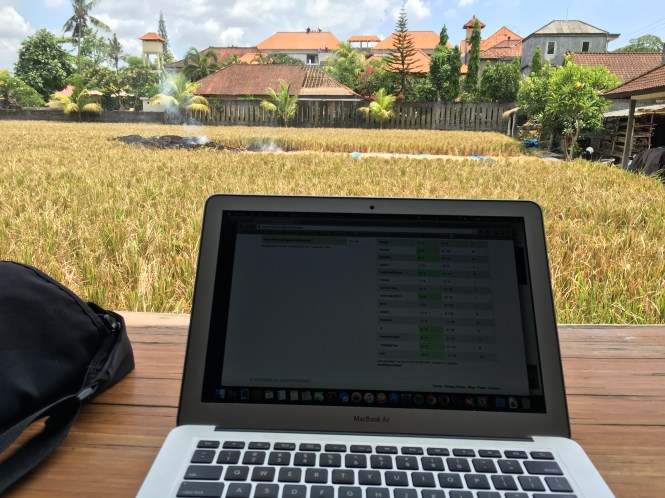
Hubud during burning season

Because I chose to travel as an always-online digital nomad, I was unable to disconnect from my friends at home. As a blogger and an Instagrammer, I was faced with a dilemma: try and build an audience, or be humble and simply enjoy your good fortune? Being that it’s 2016 and I have aspirations of being a successful creative, I chose to try and build and audience. That’s just what life is, these days.

But every time I get on Instagram to post, or I share a blog on Facebook, I’m instantly reminded of the fact that I’m across the globe, puttering around, while back at home, many people are suffocating under the pains and pressures of everyday life.

Was my travel selfish?

A fraternity brother’s father died. I donated $100 to the funeral costs, without a thought. There was no way I needed that money more than he did.

Later, a good friend suffered an even worse loss: both parents gone in an incident of domestic violence. He was in the worst grief of his young, promising life— the entire trajectory of his life upended through a situation he had no control over. And where was I? On a beach, In Bali.

I couldn’t be there for him, and I felt horrible. I donated a lot of money to him, too. That wasn’t what he needed, but it was all I could do.

Our situations easily could have been reversed

My career as a digital nomad is one part hard work, one part luck, and one part privilege. My upbringing– white, middle class, straight male in America– provided me with a million small stepping stones, stepping stones many of my friends never had, as they attempted to wade across the river of adolescence and young adulthood on their own.

I got a “bad” degree (English major), but somehow still ended up with a job after college. And I was able to take that job across the world with me. I lost that job, in early January. I couldn’t even be mad; I was just amazed I had been able to hold on to it that long.

I hopped on a plane, flew to Taipei. I found a new part-time job– remote again– in less than a week. It doesn’t pay as well, but still.

What an absurd situation

Taipei 101 from Elephant Mountain

Every day I walk the streets of Taipei. The neighborhood we are staying in is old, traditional: an immigrant neighborhood, my local friend says. He is bilingual— flips between English and Mandarin at the drop of a hat. What a valuable skill! He has more to offer than I do, but he’s unemployed and burdened with student loan debt.


He’ll get by, as will my friend, and my fraternity brother. So will the poor Thais, who are some of the happiest people you will ever meet, despite the impoverished conditions many of them live in.

I can’t “save” any of these people— nor are they asking me too. But they’re not in these unfortunate situations because they didn’t work as hard as I did, or anything else you’ll hear on the campaign trail. They just got dealt a worse hand— and even the most personable people can only bluff so much.

This is why I also donated money, twice, to Bernie Sanders’ campaign.

I feel more compassionate and understanding, since hitting the road. I am willing to sacrifice some of my dream for those of others.


So after reading my sister’s post on why you should join the Peace Corps right after college, I just donated some money to a school being built in her former village. That money buys me a one-way plane ticket to my sixth country in as many months; it might buy those girls a totally new life.


How could I possibly do anything else?


Homecoming

It’s been two months since I’ve posted an update to this blog. In that time, I ticked off three more countries (Taiwan, Hong Kong, and Nepal), finished more than a few items on my bucket list, and returned to my home state of Colorado.

Almost everyone I’ve talked to since returning says the same thing: “I didn’t think you were going to come back.” When I left, I didn’t think I was going to come back, at least for a year or more. And yet, six months after I left with a head full of half-complete visions, a different me was clearing customs at LAX, and a stern-faced immigration officer was telling me “Welcome home.”

What brought me back?

IMG_2779

Simple homesickness. Travel is a lot of fun, and it’s great to constantly be challenging yourself in new environments. But as I discussed in my last post, being a digital nomad can be very isolating, and I missed my big network of friends and family at home.

I had the money to keep traveling, and a job to sustain myself. I ran down a laundry list of cheap destinations I could hit next: Eastern Europe, Sri Lanka, back to Chiang Mai to meet a friend who was hitting the backpacker circuit in April… None of it sounded good. I was burnt out on travel, ready for the comfort and cleanliness of home.

So I bought a ticket home, and three days later I was on a plane. Such flexibility is one of the real joys of being a digital nomad. You are accountable to no one but yourself, and if you want to go home, you just go home. Here in the U.S. we are raised to believe international travel is this big, dangerous leap. But the truth is that the sort of always-connected travel a digital nomad enjoys is totally low-impact: you don’t like it, you leave.

IMG_1280

The Grass is Always Greener

So, I’ve been home for a month now. I’ve seen my friends, broke bread and maybe a few beer bottles with lots of the people I wanted to see, and a few people from my past I never expected to run into. I see the “regular” life I could have here. It would come easy, without much effort or soul-searching. And yet, all I want is to get back on the road. The road that seemed so difficult and lonely at many points over the past half-year.

Life’s funny like that.

It won’t be long before I’m in some new place, taking pictures and creating new stories. In the meantime, I’ll be regularly dripping out content from the past two months— I experienced Chinese New Year in Taipei, breezed through Hong Kong in two (expensive) days, coughed my way through Kathmandu, and trekked nine days through rural Nepal to visit Annapurna Base Camp at 4,130 meters. I took some amazing pictures, met some great people, and partied a few nights away. I lost a job, got a job, and almost managed to get myself hired for a permanent position in Austria in the middle of all that.

So I’ve got some stories to tell. I hope you’ll bear with me as I try some experimental approaches to content over the next few weeks and months. You’ll get the stories and photos from Taiwan, Nepal, Hong Kong, and even some Colorado content, as my home has become an enviable travel destination in its own right recently (thanks, legal marijuana!)

And if that’s not enough, feel free to connect on social:

@thisisyouth on Instagram

@thatisyouth on Twitter

thisisyouth on snapchat.

Namaste.

IMG_2784

Why you should join the Peace Corps straight out of college

Last week, you heard Dan’s arguments against becoming a digital nomad straight out of college.

It just doesn’t do to talk someone out of something without providing a suggestion for an alternative, so today I’ll tell you about why joining the Peace Corps straight out of college is a great idea if you have a wandering spirit but you don’t think the digital nomad lifestyle is for you.

Continue reading

Should I become a digital nomad straight out of college?

Graduation Gown Caps at Ceremony

PROBABLY NOT

I’m going to drop some real talk, which is rare amid the ENDLESS lifestyle porn of the “digital nomad” space.

I run a blog called “this is youth.” I’m 23. I’m a college graduate, tech-savvy, and self-motivated. I had never left the United States prior to this trip. I had a remote job lined up, and basically needed nothing except a little courage to step into this lifestyle. To be location independent was a serendipitous confluence of my professional goals and personal desires.

I still wouldn’t recommend the lifestyle to other young people. Here’s why:

Go join everyone else your age, and hit the backpacker trail

James Bond Island

There’s no wifi on that boat.

Look, I’m constantly called an “old soul,” told that I have my shit together, or asked for advice on “how to adult.” I don’t spend all my money or all my time binge-drinking, and that creates a bit of a disconnect for me sometimes. I’m not the most social person. But even with all that, I’m still jealous of the backpackers. I want to put down the laptop and go join them. Let’s hike to the waterfall. Let’s go out for beers, then have another one. And another one. And another one. And I want the people I’m with to understand that reference.

Nomads, by and large, wouldn’t get it. That’s because,

Digital Nomads, the successful ones, are mid-career people.

Young people in the U.S. romanticize travel. It’s a growing trend, I think largely due to the popularity of social media and the growth of travel blogs. Everyone wants to travel. “It’s just too much money,” or “I don’t have the time.” Being a digital nomad seems like a perfect solution to this problem.

And it is. But it won’t solve the problem in a way which will allow you to really see the world in the way you are imagining. Most of your time as a nomad is spent sitting in front of a computer, thinking about Twitter followers, and reading about growth hacking. Your peers are upper-middle class white people, digital marketers and entrepreneurs.

MOST of these people tried the office for years and years before embracing this lifestyle. Their perspective is very different from yours, a person who maybe, has never spent a day of your life in an office.

Yes, there are some young people out there trying it out, and a smaller portion making it work. There are many of these people in Chiang Mai. Leave the most famous and accessible digital nomad hub, and those young people start to fall off, quickly.

Suddenly, the only people your age are backpackers, and they look like they’re having a hell of a lot more fun.

Again and again, you will meet a young backpacker at a foreign coffee shop. You’ll strike up a conversation, and she’ll say “Wow! You’ve been here for two months?! I wish I could do that.” Then she’ll ask, “Have you hiked the volcano yet,” and you’ll have to say no. You’ve been working.

She’s off to the Gili Islands in two days.

You’ve gained twelve Twitter followers.

It’s really lonely

Look: everyone mentions this. “Being a digital nomad means you have to leave behind your friends and your life at home, but in the end, it’s totally worth it.” That’s the line, or whatever. Everyone acknowledges this. It comes at the end of a 1,000-word post telling you all the great things about the lifestyle— travel, culture, entrepreneurship!

What you don’t see online is a real, true telling of this isolation. It’s crushing— the constant movement of people and places presses on you, on all sides. Especially when you first start out, and the urge to move countries frequently is almost irresistible.

The friend you met at the coworking space, and the last two days talking to nonstop? Headed to Saigon in a week. Meanwhile, you’ve booked tickets to Chiang Mai already. Well fuck. See you on Facebook, I guess.

Spend a month in a place, start learning a few words? The shopkeepers start recognizing you, going beyond just “can I take your order please?” Your visa expires. Gotta go. Sawasdee!

This is happening to everyone around you, at all times. The rejection is almost total. There is little spontaneity— although with enough time, your paths may cross again, or you can plan a meetup in some foreign city. This is a cool sentence to write, and an inspirational one to read— but it’s simply not fun to live, day-to-day.

Those who choose to stay in a city for six months or more can avoid this, to some degree. But even six months doesn’t match up to a friendship at home, usually developed over years of near-daily contact. Your life at home will move on without you. Your college friends will get jobs, up and leave town, and you won’t even be there to buy them a beer at their going away party. And it gets a lot harder to make friends, after college. You want to hold on to the ones you have.

But I REALLY want to travel

If international travel is really the only thing you want to do, that’s fine. If you’re a startup-techy-marketing type of person who is ok with long stints of serious loneliness, you might be ok for a while.

But for most young people, I’d recommend working hard, saving up, then hitting the backpacker trail like everyone else your age. You will lack millennial peers as a digital nomad, and you’ll be adding more stress than you expect to your travel experience.

The Nomad lifestyle is only going to become more ubiquitous

Blurry Focus Coffee Cups on Hooks

Right now, being a digital nomad is still kind of cutting edge. With the huge shift towards distributed teams, it is becoming more commonplace by the day. The most commonly-cited studies say half the U.S. workforce is a freelancer of some sort, and that’s only likely to increase. Work-from-home is on the rise, and while most people will never go further than their neighborhood coffee shop, anyone with a remote job can technically be a digital nomad.

As visibility and understanding of this lifestyle grows, so will the number of companies willing to accommodate it; and the number of services designed to facilitate it. In 10 years, it will be considerably easier to be a nomad. You will be considerably further along in your career, and probably have less opportunity to drop everything and go travel without obligations for months on end.

So take advantage while you have that opportunity. Leave it all behind, and I mean ALL of it. You’ll never get those gap years of your youth back. Live it up. There’s plenty of time for work, later.