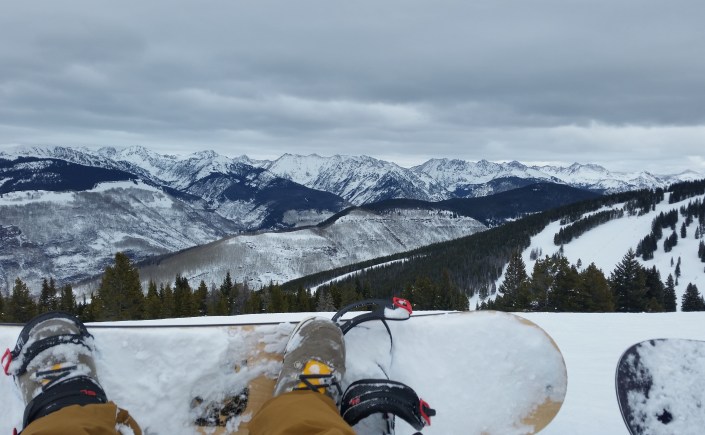
Why you should join the Peace Corps straight out of college

Last week, you heard Dan’s arguments against becoming a digital nomad straight out of college.

It just doesn’t do to talk someone out of something without providing a suggestion for an alternative, so today I’ll tell you about why joining the Peace Corps straight out of college is a great idea if you have a wandering spirit but you don’t think the digital nomad lifestyle is for you.

Continue reading

Should I become a digital nomad straight out of college?

Graduation Gown Caps at Ceremony

PROBABLY NOT

I’m going to drop some real talk, which is rare amid the ENDLESS lifestyle porn of the “digital nomad” space.

I run a blog called “this is youth.” I’m 23. I’m a college graduate, tech-savvy, and self-motivated. I had never left the United States prior to this trip. I had a remote job lined up, and basically needed nothing except a little courage to step into this lifestyle. To be location independent was a serendipitous confluence of my professional goals and personal desires.

I still wouldn’t recommend the lifestyle to other young people. Here’s why:

Go join everyone else your age, and hit the backpacker trail

James Bond Island

There’s no wifi on that boat.

Look, I’m constantly called an “old soul,” told that I have my shit together, or asked for advice on “how to adult.” I don’t spend all my money or all my time binge-drinking, and that creates a bit of a disconnect for me sometimes. I’m not the most social person. But even with all that, I’m still jealous of the backpackers. I want to put down the laptop and go join them. Let’s hike to the waterfall. Let’s go out for beers, then have another one. And another one. And another one. And I want the people I’m with to understand that reference.

Nomads, by and large, wouldn’t get it. That’s because,

Digital Nomads, the successful ones, are mid-career people.

Young people in the U.S. romanticize travel. It’s a growing trend, I think largely due to the popularity of social media and the growth of travel blogs. Everyone wants to travel. “It’s just too much money,” or “I don’t have the time.” Being a digital nomad seems like a perfect solution to this problem.

And it is. But it won’t solve the problem in a way which will allow you to really see the world in the way you are imagining. Most of your time as a nomad is spent sitting in front of a computer, thinking about Twitter followers, and reading about growth hacking. Your peers are upper-middle class white people, digital marketers and entrepreneurs.

MOST of these people tried the office for years and years before embracing this lifestyle. Their perspective is very different from yours, a person who maybe, has never spent a day of your life in an office.

Yes, there are some young people out there trying it out, and a smaller portion making it work. There are many of these people in Chiang Mai. Leave the most famous and accessible digital nomad hub, and those young people start to fall off, quickly.

Suddenly, the only people your age are backpackers, and they look like they’re having a hell of a lot more fun.

Again and again, you will meet a young backpacker at a foreign coffee shop. You’ll strike up a conversation, and she’ll say “Wow! You’ve been here for two months?! I wish I could do that.” Then she’ll ask, “Have you hiked the volcano yet,” and you’ll have to say no. You’ve been working.

She’s off to the Gili Islands in two days.

You’ve gained twelve Twitter followers.

It’s really lonely

Look: everyone mentions this. “Being a digital nomad means you have to leave behind your friends and your life at home, but in the end, it’s totally worth it.” That’s the line, or whatever. Everyone acknowledges this. It comes at the end of a 1,000-word post telling you all the great things about the lifestyle— travel, culture, entrepreneurship!

What you don’t see online is a real, true telling of this isolation. It’s crushing— the constant movement of people and places presses on you, on all sides. Especially when you first start out, and the urge to move countries frequently is almost irresistible.

The friend you met at the coworking space, and the last two days talking to nonstop? Headed to Saigon in a week. Meanwhile, you’ve booked tickets to Chiang Mai already. Well fuck. See you on Facebook, I guess.

Spend a month in a place, start learning a few words? The shopkeepers start recognizing you, going beyond just “can I take your order please?” Your visa expires. Gotta go. Sawasdee!

This is happening to everyone around you, at all times. The rejection is almost total. There is little spontaneity— although with enough time, your paths may cross again, or you can plan a meetup in some foreign city. This is a cool sentence to write, and an inspirational one to read— but it’s simply not fun to live, day-to-day.

Those who choose to stay in a city for six months or more can avoid this, to some degree. But even six months doesn’t match up to a friendship at home, usually developed over years of near-daily contact. Your life at home will move on without you. Your college friends will get jobs, up and leave town, and you won’t even be there to buy them a beer at their going away party. And it gets a lot harder to make friends, after college. You want to hold on to the ones you have.

But I REALLY want to travel

If international travel is really the only thing you want to do, that’s fine. If you’re a startup-techy-marketing type of person who is ok with long stints of serious loneliness, you might be ok for a while.

But for most young people, I’d recommend working hard, saving up, then hitting the backpacker trail like everyone else your age. You will lack millennial peers as a digital nomad, and you’ll be adding more stress than you expect to your travel experience.

The Nomad lifestyle is only going to become more ubiquitous

Blurry Focus Coffee Cups on Hooks

Right now, being a digital nomad is still kind of cutting edge. With the huge shift towards distributed teams, it is becoming more commonplace by the day. The most commonly-cited studies say half the U.S. workforce is a freelancer of some sort, and that’s only likely to increase. Work-from-home is on the rise, and while most people will never go further than their neighborhood coffee shop, anyone with a remote job can technically be a digital nomad.

As visibility and understanding of this lifestyle grows, so will the number of companies willing to accommodate it; and the number of services designed to facilitate it. In 10 years, it will be considerably easier to be a nomad. You will be considerably further along in your career, and probably have less opportunity to drop everything and go travel without obligations for months on end.

So take advantage while you have that opportunity. Leave it all behind, and I mean ALL of it. You’ll never get those gap years of your youth back. Live it up. There’s plenty of time for work, later.
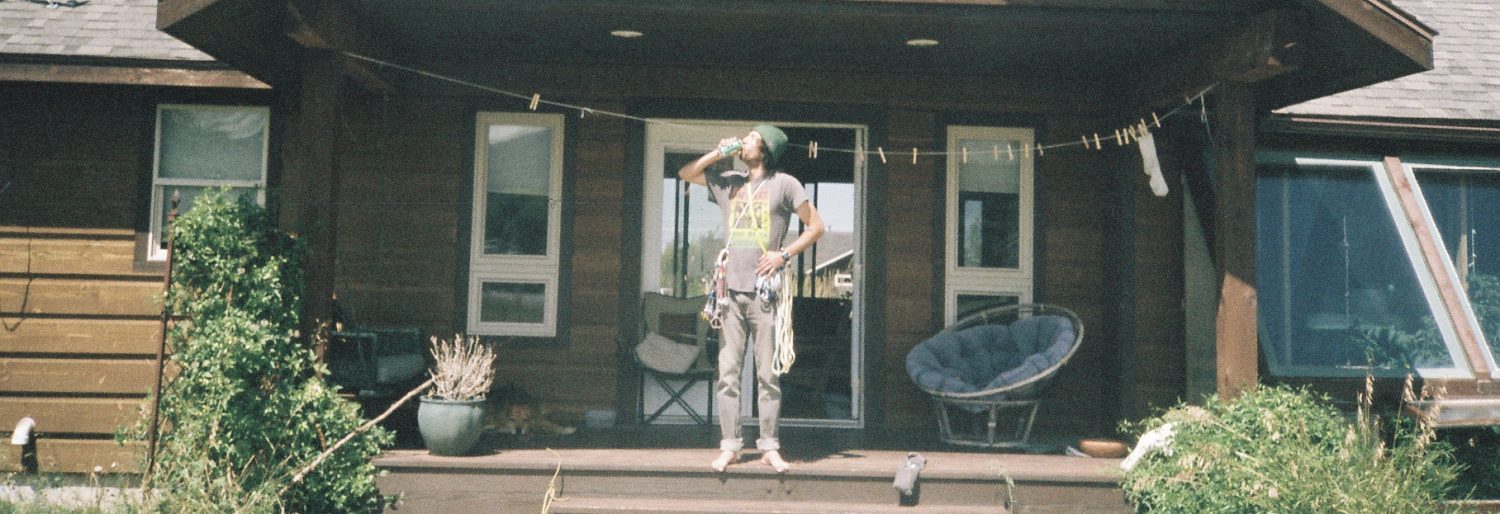
Top 5 tips for a cash-strapped digital nomad


I had the misfortune of losing my job this past week. After two years of surviving cut after cut, the endless layoffs at Inside.com finally got me. That’s startup life, I suppose. And truthfully, it was probably time for me to move on, level up in my life and in my career.

I know it’s a weird thing to write from a foreign country halfway across the world, but I had gotten complacent.

Life as a digital nomad looks a lot different once your income stream dries up. Things get a lot more stressful. I’m lucky enough to have saved up a nice little cushion, so I’m trying to treat this break as a vacation, rather than an excuse to panic. Still, money suddenly became a lot more precious to me. Here are the top five things I’m doing to save money while traveling (as a digital nomad, specifically).

Get free water at your coworking space

Since nomads often frequent undeveloped countries, bottled drinking water is one of those little expenses that can quickly add up. Especially in a place like Bali, where we are currently experiencing 90 degree days with alarming regularity. You have to drink to avoid dangerous dehydration— but you don’t necessarily have to pay for that water.

If you are using a coworking space, almost all of them offer water coolers, with safe filtered water. Use them. Get a water bottle and fill it up every day before you leave. Bring it back the next day, and fill it up again.

It’s also smart to stop buying coffee, and use the free stuff provided at the coworking space. As a coffee lover myself, I find it hard to consistently obey that last rule, but I am trying. If you make use of the free water and coffee every day, you can often more than make up for the cost of your coworking.

Of course, if you are truly budget strapped, then it’s often more economical to just

Drop your coworking space

In Bali, this is simply not feasible— Internet speeds are awful in most places on this island. You can’t rely on a coffee shop, and most hotels, homestays, and guesthouses can barely handle your Facebook uploads.

However, in a place like Chiang Mai or Taipei, it’s worth asking yourself: is a coworking space a necessary expense? You can work just the same from your apartment. It might not be as social, but skipping the trendy coworking can save you anywhere from $50 to $300 a month.

You might have less cool Instagram shots, but you will have more money to eat and experience the local culture. Which is the reason you’re abroad in the first place, right??

One option here is to

Replace your coworking with a mobile hotspot

Since I don’t need blazing fast Internet, I’ve opted to supplement my basic coworking with pay-as-you-go mobile data. I use tethering on my iPhone to beam the connection to my computer. In general, it’s a lot cheaper. Here in Bali, 4 GB of data on Telekomsel costs 100.000 rupiah (~$7.50 USD). 25 hours of coworking at Hubud costs $60 USD. Guess which lasts me longer?

4G tethering through my phone is almost always faster than the free wifi offered at the cafes and restaurants throughout town.

Plus, Telekomsel has coverage throughout the Ubud area. I’ve actually been quite pleased with the coverage here: it’s fast (4G), and rarely do I drop coverage. I think Telekomsel must have invested some serious time and money into their infrastructure, because prior to arrival, I had heard their coverage was slow and spotty. That hasn’t been true in my experience, at all.

Eat local

This is a tried and true travel tip, or course. Local food is always cheaper, and often better, than the Western food on offer. When you have money coming in though, it can be easy to treat yourself; this is why its not uncommon for 20-somethings living in big cities to drop fifty, sixty, seventy dollars on brunch. Why not?

Why not is you’ll get just as full on a $1.50 dish of Nasi Goreng as you will on a $12 green shake with eggs and toast. Granted, you’ll get really sick of– and possibly from– the Nasi Goreng by the time to leave Bali (ahem), but over the course of a month, you’ll save enough to be able to afford a plane ticket to your next destination.

Plus, when you return home, you’ll be able to explain the ins and outs of Indonesian food, which will make it seem like you actually went somewhere, and did something.

Set aside an emergency fund

This is something you should do BEFORE you start your trip. Not everyone has this luxury, I know. But IF POSSIBLE, you should set aside at least a few hundred dollars in case things go sideways. Ideally, this fund should contain enough for a plane ticket home, and then a few hundred on top.

I understand a lot of people like to live life a little riskier than that, and that’s fine. It’s certainly possible– and probably a better story– to work yourself out of that hole, learn to survive, and find a way home from the verge of bankruptcy.

But for me, I prefer a little more stability. My savings account means I have a few months of runway to seek out freelance work, affiliate income, or a new full time job before I have to head home with my tail between my legs.

In the meantime, I’m taking all the steps above to reduce my burn and increase my runway, but I’m damn glad I have the safety cushion.

Yovo, yovo, bon soir – Visiting Benin

Benin gateway to slavery

[ed. note: I’m off exploring Taipei. Our ski town correspondent is skiing pow. In the meantime, here’s a guest post about general travel in Benin, West Africa. The writing’s courtesy of my sister, who served 2.5 years of Peace Corps service there. It’s a fascinating piece—I guarantee you will learn something new!]

I am a geography nerd who loves maps and learning about the world, so I knew about the country called Benin, but I probably would never have visited had the Peace Corps not invited me to serve there. (More on Peace Corps service later!)

Benin was colonized by the French, and there is still a small contingent of French  voluntourists who visit the country, but in the English-speaking world, it is largely unknown. It deserves more recognition.

Benin is a small, key-shaped (or so they say) nation on the coast of West Africa. It is bordered on the east by Nigeria, and on the west by Togo (which is one country over from Ghana, perhaps the best-known West African nation and a poster-child for international development).

Yes, you will need to have some French language skills to get by here. Very few people speak English. Though once you get out of the capital, you’ll find that many of the people you encounter don’t speak French either. They will be thrilled to teach you a few phrases in the local language, though.

Here are some interesting facts about Benin and advice for your travels there.

Continue reading

A Day in the Life

[ed. note: ski town content is finally resuming, courtesy of a friend in Vail. He’s a great writer and a better ski bum than I. His writing will run alongside my travel content as we move towards a more diverse magazine. Hope you all are enjoying your winters!]

Wham!  A slap of the snooze button and a groan, I’m awake at 5am.  Time to video chat with the now ex-girlfriend in Bulgaria, it’s already 2pm there.  After a shower and a quick breakfast I’m out the door by 6, just enough time to walk to work for my 6:15 shift.

I breath in the crisp Rocky Mountain air and start walking through 6 inches of fresh snow, thinking to myself – ‘Damn, too bad I’m not cruising this fresh powder instead of serving breakfast to tourists. . .’

20151104_111313.jpg

Soon after I get to work I devise a plan to get out early. Sure enough, where there’s a will, there’s a way.  Working fast and talking faster, I’m out the door by 8.  Smell ya later, it’s time for some much needed snowboarding.  I’m heading back home and a friend, let’s call him T, excitedly calls me and asks if I’m going to shred the gnar.  Fuck ya.  Back home by 8:30.  A quick snack and the addition of some very warm socks later and it’s time to head to the village.  We meet up at Gondola One and by the looks of things, we’re among the first skiers on the mountain.  Hells Yes.

Excitement builds as we are comfortably lifted up the mountain in the padded and heated gondola.  Gloves, goggles, face mask, powder skirt and a pounding heart.  The trees are laden with fresh snow, and in some places, ice; a real winter wonderland.  The doors open, we strap in and off we go.  Cruising thick stacks of fresh snow, running my fingers through it as I’m rocketing down the mountain parallel to the ground.  I catch air and boom! A shot of cold champagne powder slams into my face, nearly choking me. In the ski world this is called a face shot.  In this town if you’re not taking fresh snow to the dome, it’s not a powder day.

If you’ve ever surfed before, riding fresh powder is very similar, however, I ironically think that snowboarding is much more fluid.  The waves are moving and pushing beneath you, exerting their force on you, but with snowboarding everything just flows.  It doesn’t matter how you move your board, it’s like sliding down whipped cream.  And the best part is that wiping out is fun.  Ever jumped into a pile of waist deep snow?  Might as well be falling onto a pile of feathers.  These are the days when you drop cliffs and try crazy tricks.

The deep snow also has a very surreal calming effect.  Sound is dampened and being surrounded by an entire world of white allows you to drift into a totally different plane of reality.  It’s just you, the mountain, and your board.  In some ways snowboarding has been one of the most spiritual experiences of my life (the exception, by far, being DMT).

20151128_095442.jpg

T and I meet up at the bottom of the lift, giant, stupid grins spread across our faces.  A fist bump later and we’re traveling up the mountain again, this time on an open chair lift, cold air on our faces, shouting playful encouragement at the skiers below us.  T looks over at me; ‘safety meeting?’  ‘You know it.’  We cruise into the trees, find a nice smoke shack to post up in and spark a bowl.  Taking full advantage of legal marijuana has been one of my favorite parts about living in Colorado.  At times I smoke too much – Ha!  But blazing up on the mountain (among other things) is always recommended.  I always feel a bit more connected to my board and the mountain after inhaling a bit of ganja and usually end up pushing myself just because I’ll get into sketchier situations, say ‘fuck it, let’s do this’ and flow through them.

T and I do a few more runs, zipping through the trees and traversing most of the front side of the mountain.  But soon enough, the munchies kick in and it’s time for the classic chicken & bean burrito at La Cantina, a very ski bum budget friendly Mexican bar not far from the slopes.

Then it’s time for the 10 minute walk home, a game of zombies with the roommate and a freshly cooked meal before getting ready to wake up and do it all over again.


This is my life.

I’m very excited to share it with you.  Stories of adventure, drugs, danger, love and life decisions.  Battles with depression and coming of age.  The joys and turmoils of a fast paced life.  The behind the scenes of what it really means to be a ski bum.  Of letting go and allowing life to take you where you need to go – whether it’s dropping out of college to follow your dreams or opening your heart to another human being.

I live, work and play in the resort town of Vail, Colorado, where everything revolves around the snow.  Whether it’s good or bad drastically affects the tourism business and can mean the difference between a lucrative season or going out of business.  For example, I-70 – the interstate that connects Vail to the rest of the world – causes millions of dollars in losses every time it is shut down.  That being said, living in a resort town allows you to make amazing money with very little experience; really, only the skill of being able to talk to people is required.  It also means 5 star meals and fresh seafood in the middle of the Rockies.  And, working for the company Vail Resorts means that you have the opportunity to snowboard 7 days a week for FREE.  Really can’t beat that.  Stay tuned.


– C

2015-02-21 22.53.28


Like it, love it, hate it? Tell me what to write about next in the comments below.