
Writing about my accident, I noticed I had not written a post in almost a year! Ridiculous.
So instead of the drama of things going wrong, let’s revisit a couple successes. And this winter was quite the success.
Continue reading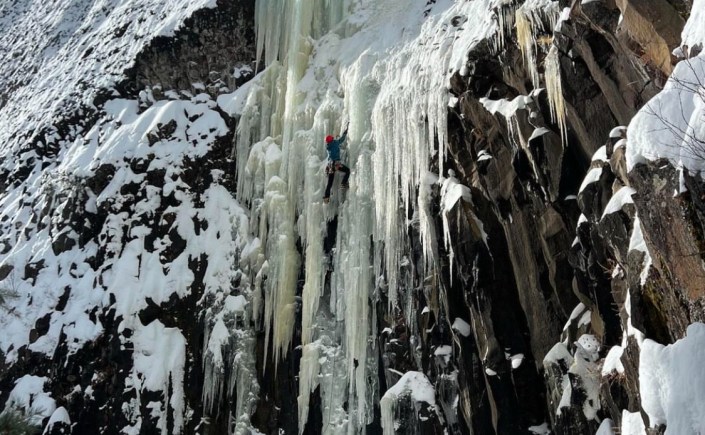
Writing about my accident, I noticed I had not written a post in almost a year! Ridiculous.
So instead of the drama of things going wrong, let’s revisit a couple successes. And this winter was quite the success.
Continue reading
Hello from Huaraz!
Back for my second season in the Cordillera Blanca. And none too soon it seems, as there has been significant glacial retreat even since I was last here 11 months ago.
Peru’s Cordillera Blanca is a tropical mountain range, making it especially vulnerable to the effects of a warming global climate. Whatever your political stance on the issue, it is impossible to deny that these glaciers are melting. Here’s just a few quick photo comparisons from the lower-elevation peaks around town:
Continue reading
I flew from New York to Milan, arriving at Malpensa airport 8 a.m. on Wednesday morning. I recollected my duffel full of mountaineering equipment, took the train to the city center, and then walked to my buddy Enrico’s apartment, 30 kilos on my back. He was finishing up work; we pored over avalanche forecasts and trip reports. We asked all our contacts for conditions, suggestions. We scoured the Facebook groups. We ended up choosing the Rebuffat Couloir on the Tour Ronde, a route no one had suggested, and for which we had absolutely zero conditions information.
The weather looked best for tomorrow. We woke up, 5:15 a.m., dragged ourselves to the car, and drove to Courmayuer. Parked, dressed, and just enough spare time for an espresso. 8:30 a.m., first lift up, and we were on it. American country music played through the stereo system on the shiny cable car. 9:00, suited up and ready for action, we stepped onto the glacier at 11,300 feet. I’d always heard alpinism in Europe was accessible, but this was next-level.
Continue reading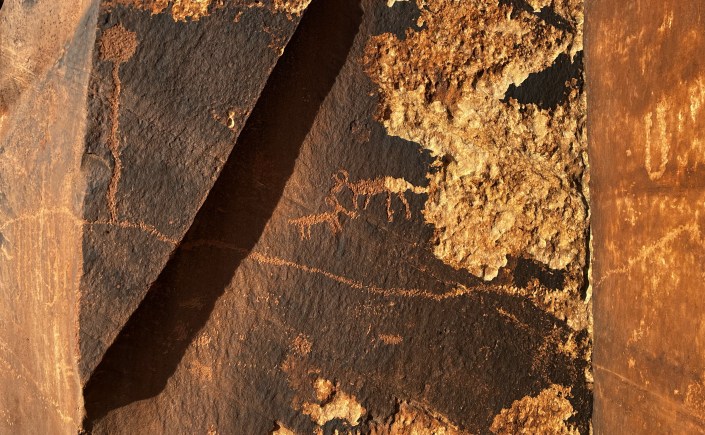
I’ve just emerged from a seasonal sabbatical in the desert. As usual, we did a lot of rock climbing. The climbing out there is always good – but we won’t linger on that here.
One of the more fascinating aspects of the deserts of the American southwest is the cultural heritage. Artifacts and rock art from a number of Native American cultures are visible here. These things aren’t in a museum or on a heavily-trafficked tourist trail: for the most part, they’re just sitting in the desert, scratched on the side of soft sandstone walls or sitting deep within remote canyons.
There is a special feeling I get when I walk up to these sites. I am not a religious person, but from the first time I saw ancient petroglyphs scrawled on a wall, I felt a spiritual presence. There is no other word for it, and it’s a feeling I still get at many of these sites.

Andrew Gulliford, in his book “Bears Ears: Landscape of Refuge and Resistance”, writes:
“In Navajo belief, a dead person’s spirit may continue to reside where that person had lived and died. Their chindi or spirit may be lonely and seek to haunt or terrorize visitors.”
“Bears Ears: Landscape of Refuge and Resistance”, 2022, Andrew Gulliford, page 103
I don’t feel a malevolence, but I do feel a presence. I encourage you to visit yourself — maybe you will feel it too.
Continue reading
Some of the great camps I’ve been privilege to over the past six weeks in Peru.
Continue reading thisisyouth