Why you should join the Peace Corps straight out of college

Last week, you heard Dan’s arguments against becoming a digital nomad straight out of college.

It just doesn’t do to talk someone out of something without providing a suggestion for an alternative, so today I’ll tell you about why joining the Peace Corps straight out of college is a great idea if you have a wandering spirit but you don’t think the digital nomad lifestyle is for you.

Continue reading

Should I become a digital nomad straight out of college?

Graduation Gown Caps at Ceremony

PROBABLY NOT

I’m going to drop some real talk, which is rare amid the ENDLESS lifestyle porn of the “digital nomad” space.

I run a blog called “this is youth.” I’m 23. I’m a college graduate, tech-savvy, and self-motivated. I had never left the United States prior to this trip. I had a remote job lined up, and basically needed nothing except a little courage to step into this lifestyle. To be location independent was a serendipitous confluence of my professional goals and personal desires.

I still wouldn’t recommend the lifestyle to other young people. Here’s why:

Go join everyone else your age, and hit the backpacker trail

James Bond Island

There’s no wifi on that boat.

Look, I’m constantly called an “old soul,” told that I have my shit together, or asked for advice on “how to adult.” I don’t spend all my money or all my time binge-drinking, and that creates a bit of a disconnect for me sometimes. I’m not the most social person. But even with all that, I’m still jealous of the backpackers. I want to put down the laptop and go join them. Let’s hike to the waterfall. Let’s go out for beers, then have another one. And another one. And another one. And I want the people I’m with to understand that reference.

Nomads, by and large, wouldn’t get it. That’s because,

Digital Nomads, the successful ones, are mid-career people.

Young people in the U.S. romanticize travel. It’s a growing trend, I think largely due to the popularity of social media and the growth of travel blogs. Everyone wants to travel. “It’s just too much money,” or “I don’t have the time.” Being a digital nomad seems like a perfect solution to this problem.

And it is. But it won’t solve the problem in a way which will allow you to really see the world in the way you are imagining. Most of your time as a nomad is spent sitting in front of a computer, thinking about Twitter followers, and reading about growth hacking. Your peers are upper-middle class white people, digital marketers and entrepreneurs.

MOST of these people tried the office for years and years before embracing this lifestyle. Their perspective is very different from yours, a person who maybe, has never spent a day of your life in an office.

Yes, there are some young people out there trying it out, and a smaller portion making it work. There are many of these people in Chiang Mai. Leave the most famous and accessible digital nomad hub, and those young people start to fall off, quickly.

Suddenly, the only people your age are backpackers, and they look like they’re having a hell of a lot more fun.

Again and again, you will meet a young backpacker at a foreign coffee shop. You’ll strike up a conversation, and she’ll say “Wow! You’ve been here for two months?! I wish I could do that.” Then she’ll ask, “Have you hiked the volcano yet,” and you’ll have to say no. You’ve been working.

She’s off to the Gili Islands in two days.

You’ve gained twelve Twitter followers.

It’s really lonely

Look: everyone mentions this. “Being a digital nomad means you have to leave behind your friends and your life at home, but in the end, it’s totally worth it.” That’s the line, or whatever. Everyone acknowledges this. It comes at the end of a 1,000-word post telling you all the great things about the lifestyle— travel, culture, entrepreneurship!

What you don’t see online is a real, true telling of this isolation. It’s crushing— the constant movement of people and places presses on you, on all sides. Especially when you first start out, and the urge to move countries frequently is almost irresistible.

The friend you met at the coworking space, and the last two days talking to nonstop? Headed to Saigon in a week. Meanwhile, you’ve booked tickets to Chiang Mai already. Well fuck. See you on Facebook, I guess.

Spend a month in a place, start learning a few words? The shopkeepers start recognizing you, going beyond just “can I take your order please?” Your visa expires. Gotta go. Sawasdee!

This is happening to everyone around you, at all times. The rejection is almost total. There is little spontaneity— although with enough time, your paths may cross again, or you can plan a meetup in some foreign city. This is a cool sentence to write, and an inspirational one to read— but it’s simply not fun to live, day-to-day.

Those who choose to stay in a city for six months or more can avoid this, to some degree. But even six months doesn’t match up to a friendship at home, usually developed over years of near-daily contact. Your life at home will move on without you. Your college friends will get jobs, up and leave town, and you won’t even be there to buy them a beer at their going away party. And it gets a lot harder to make friends, after college. You want to hold on to the ones you have.

But I REALLY want to travel

If international travel is really the only thing you want to do, that’s fine. If you’re a startup-techy-marketing type of person who is ok with long stints of serious loneliness, you might be ok for a while.

But for most young people, I’d recommend working hard, saving up, then hitting the backpacker trail like everyone else your age. You will lack millennial peers as a digital nomad, and you’ll be adding more stress than you expect to your travel experience.

The Nomad lifestyle is only going to become more ubiquitous

Blurry Focus Coffee Cups on Hooks

Right now, being a digital nomad is still kind of cutting edge. With the huge shift towards distributed teams, it is becoming more commonplace by the day. The most commonly-cited studies say half the U.S. workforce is a freelancer of some sort, and that’s only likely to increase. Work-from-home is on the rise, and while most people will never go further than their neighborhood coffee shop, anyone with a remote job can technically be a digital nomad.

As visibility and understanding of this lifestyle grows, so will the number of companies willing to accommodate it; and the number of services designed to facilitate it. In 10 years, it will be considerably easier to be a nomad. You will be considerably further along in your career, and probably have less opportunity to drop everything and go travel without obligations for months on end.

So take advantage while you have that opportunity. Leave it all behind, and I mean ALL of it. You’ll never get those gap years of your youth back. Live it up. There’s plenty of time for work, later.

Top 5 tips for a cash-strapped digital nomad


I had the misfortune of losing my job this past week. After two years of surviving cut after cut, the endless layoffs at Inside.com finally got me. That’s startup life, I suppose. And truthfully, it was probably time for me to move on, level up in my life and in my career.

I know it’s a weird thing to write from a foreign country halfway across the world, but I had gotten complacent.

Life as a digital nomad looks a lot different once your income stream dries up. Things get a lot more stressful. I’m lucky enough to have saved up a nice little cushion, so I’m trying to treat this break as a vacation, rather than an excuse to panic. Still, money suddenly became a lot more precious to me. Here are the top five things I’m doing to save money while traveling (as a digital nomad, specifically).

Get free water at your coworking space

Since nomads often frequent undeveloped countries, bottled drinking water is one of those little expenses that can quickly add up. Especially in a place like Bali, where we are currently experiencing 90 degree days with alarming regularity. You have to drink to avoid dangerous dehydration— but you don’t necessarily have to pay for that water.

If you are using a coworking space, almost all of them offer water coolers, with safe filtered water. Use them. Get a water bottle and fill it up every day before you leave. Bring it back the next day, and fill it up again.

It’s also smart to stop buying coffee, and use the free stuff provided at the coworking space. As a coffee lover myself, I find it hard to consistently obey that last rule, but I am trying. If you make use of the free water and coffee every day, you can often more than make up for the cost of your coworking.

Of course, if you are truly budget strapped, then it’s often more economical to just

Drop your coworking space

In Bali, this is simply not feasible— Internet speeds are awful in most places on this island. You can’t rely on a coffee shop, and most hotels, homestays, and guesthouses can barely handle your Facebook uploads.

However, in a place like Chiang Mai or Taipei, it’s worth asking yourself: is a coworking space a necessary expense? You can work just the same from your apartment. It might not be as social, but skipping the trendy coworking can save you anywhere from $50 to $300 a month.

You might have less cool Instagram shots, but you will have more money to eat and experience the local culture. Which is the reason you’re abroad in the first place, right??

One option here is to

Replace your coworking with a mobile hotspot

Since I don’t need blazing fast Internet, I’ve opted to supplement my basic coworking with pay-as-you-go mobile data. I use tethering on my iPhone to beam the connection to my computer. In general, it’s a lot cheaper. Here in Bali, 4 GB of data on Telekomsel costs 100.000 rupiah (~$7.50 USD). 25 hours of coworking at Hubud costs $60 USD. Guess which lasts me longer?

4G tethering through my phone is almost always faster than the free wifi offered at the cafes and restaurants throughout town.

Plus, Telekomsel has coverage throughout the Ubud area. I’ve actually been quite pleased with the coverage here: it’s fast (4G), and rarely do I drop coverage. I think Telekomsel must have invested some serious time and money into their infrastructure, because prior to arrival, I had heard their coverage was slow and spotty. That hasn’t been true in my experience, at all.

Eat local

This is a tried and true travel tip, or course. Local food is always cheaper, and often better, than the Western food on offer. When you have money coming in though, it can be easy to treat yourself; this is why its not uncommon for 20-somethings living in big cities to drop fifty, sixty, seventy dollars on brunch. Why not?

Why not is you’ll get just as full on a $1.50 dish of Nasi Goreng as you will on a $12 green shake with eggs and toast. Granted, you’ll get really sick of– and possibly from– the Nasi Goreng by the time to leave Bali (ahem), but over the course of a month, you’ll save enough to be able to afford a plane ticket to your next destination.

Plus, when you return home, you’ll be able to explain the ins and outs of Indonesian food, which will make it seem like you actually went somewhere, and did something.

Set aside an emergency fund

This is something you should do BEFORE you start your trip. Not everyone has this luxury, I know. But IF POSSIBLE, you should set aside at least a few hundred dollars in case things go sideways. Ideally, this fund should contain enough for a plane ticket home, and then a few hundred on top.

I understand a lot of people like to live life a little riskier than that, and that’s fine. It’s certainly possible– and probably a better story– to work yourself out of that hole, learn to survive, and find a way home from the verge of bankruptcy.

But for me, I prefer a little more stability. My savings account means I have a few months of runway to seek out freelance work, affiliate income, or a new full time job before I have to head home with my tail between my legs.

In the meantime, I’m taking all the steps above to reduce my burn and increase my runway, but I’m damn glad I have the safety cushion.

Yovo, yovo, bon soir – Visiting Benin

Benin gateway to slavery

[ed. note: I’m off exploring Taipei. Our ski town correspondent is skiing pow. In the meantime, here’s a guest post about general travel in Benin, West Africa. The writing’s courtesy of my sister, who served 2.5 years of Peace Corps service there. It’s a fascinating piece—I guarantee you will learn something new!]

I am a geography nerd who loves maps and learning about the world, so I knew about the country called Benin, but I probably would never have visited had the Peace Corps not invited me to serve there. (More on Peace Corps service later!)

Benin was colonized by the French, and there is still a small contingent of French  voluntourists who visit the country, but in the English-speaking world, it is largely unknown. It deserves more recognition.

Benin is a small, key-shaped (or so they say) nation on the coast of West Africa. It is bordered on the east by Nigeria, and on the west by Togo (which is one country over from Ghana, perhaps the best-known West African nation and a poster-child for international development).

Yes, you will need to have some French language skills to get by here. Very few people speak English. Though once you get out of the capital, you’ll find that many of the people you encounter don’t speak French either. They will be thrilled to teach you a few phrases in the local language, though.

Here are some interesting facts about Benin and advice for your travels there.

Continue reading

6 things to do in Koh Lanta, Thailand

Activities to do in Koh Lanta Thailand

Southern Thailand is a sun-drenched paradise. It’s also a morass of disrespectful backpackers, sullen locals, and sex tourism. And yet, it is quickly becoming one of the most popular tourist destinations in the world, drawing pilgrims by the tens of thousands with Instagram-worth beaches, mouth-watering food (literally!), and budget-friendly prices.

So what’s a person to do, if they want to sip margaritas on a Thai beach without suffering all the above, or being harassed by touts every two seconds? Go to Koh Lanta, of course.

Koh Lanta is a medium-sized island in the Andaman sea, located very close to the Thai mainland in Krabi province. It’s just a short boat ride away from the famous, but overcrowded, Koh Phi Phi. Some of the best scuba dive sites in the Andaman Sea are accessible from Koh Lanta. And best of all: the place still has a low-key, quiet vibe.

You will certainly see some backpackers, but the place isn’t overrun with the hordes of partiers like Koh Samui and Koh Phi Phi are. A single two-lane road circles the island, and most of the route is rural, undeveloped jungle.

It’s a relaxing, authentic spot for a holiday.

(If you are curious about the digital nomad aspect of Koh Lanta island, my other post goes into more detail. This one is for general travelers).

So what is there to do in Koh Lanta?

Learn to drive a scooter
IMG_4614

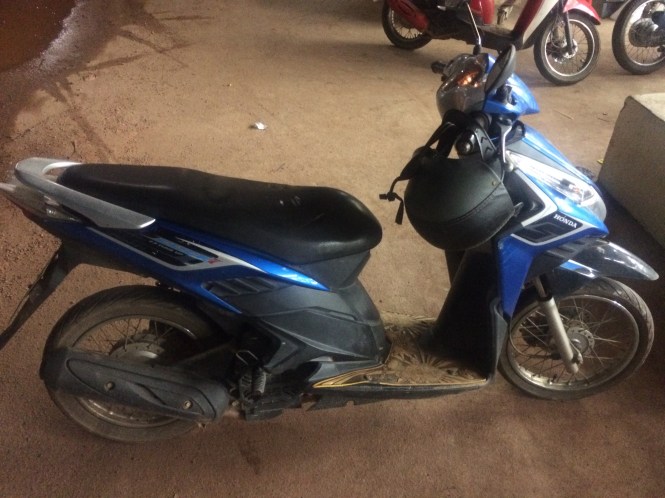
Our first scooter in Southeast Asia.

Take advantage of that deserted two-lane road to learn how to drive a scooter safely. Motorbikes, or scooters, are the preferred method of transport throughout most of Southeast Asia. If you are comfortable driving one, a whole new world of experience opens up to you. You can scooter the length of Vietnam. Or take a weekend trip out of Chiang Mai to go see the Golden Triangle, where the borders of Thailand, Laos, and Burma converge. Heck, drive to the grocery store. Whatever it is, if you know how to drive a scooter, you never need to charter a tuk-tuk again.

Koh Lanta is a perfect place to learn to drive a scooter. It’s where I learned, and now I can confidently drive one in city traffic. Koh Lanta’s one road is (relatively) well-maintained, and traffic is light. There are a million places around the island which will happily rent you a scooter and give you a quick lesson on how to operate it. Gas is abundant and cheap.

You can take it out for a quick spin in the parking lot, learn the basics of balance and turning, and when you feel comfortable, try it out on the main road. Renting scooters is a perfectly legitimate business in Thailand, and it’s expected to see tourists on the roads. Some people report that Thai police have pulled them over and ask for bribes, but we didn’t experience this. In fact, once, we were even waved through a checkpoint they had set up without so much as a word. YMMV, but worst case scenario, pay the guy his bribe and be on your way. It’s unlikely to cost you more than a few USD.

Can I drive a scooter in Thailand without a motorcycle license?

Yes. This is a huge industry in Thailand and no one cares if you have a license or know how to drive. This is a blessing and a curse. On one hand, it’s no hassle at all to get a rental: paperwork? Insurance? Liability? These words mean nothing to the Thais. On the other hand, it means there are potentially a lot of very inexperienced drivers sharing the road with you. The plethora of travelers sporting scraped knees, crutches, or arm slings around Koh Lanta attests to this.

Luckily, the hospitals are well-equipped for such incidents. The downside is, if you don’t have your motorcycle license, your travel insurance and/or health insurance is unlikely to cover your medical costs. However, these are usually low and easy to pay out of pocket, for most injuries.

Final word: pay attention to the road, go slow at first, and ease yourself into scooter driving by learning somewhere quiet and remote, like Koh Lanta. Don’t try and learn in a big chaotic city like Chiang Mai, Saigon, or Ubud. You’ll save yourself a lot of stress.

Hit the beach!
IMG_4578

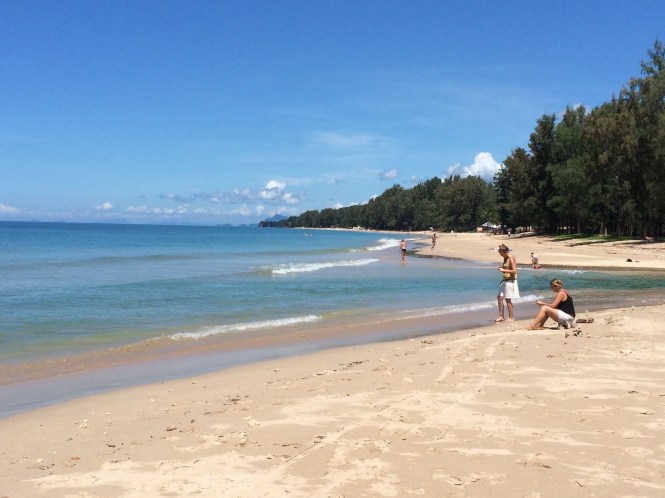
You didn’t come to a tropical island to waste away inside all day, did you?? Lanta’s got some great beaches: big ones, along the tourist strips, but also smaller, hidden ones only accessible by motorbike or hiking through the jungle. A bit of local knowledge will go a long way here, as will an adventurous spirit. I’m not giving up any secrets here on the Internet, but asking around once you’re on the island will usually yield some local beta.

Lanta’s beaches are pretty tame, as far as waves go. You won’t find anyone surfing here. The tides are pretty easy and manageable, since Lanta’s located in the protected bay of the Andaman sea.

The beaches are a great place to lay out, enjoy some sun, and splash in the water. Unlike more popular beaches in Thailand, you won’t find many touts here. I don’t know about you, but it always helps my relaxation when I don’t have to turn down a sarong or sunglasses every three minutes.

If sand’s not really your thing, you can get a Thai massage at several locations on the beach, so you can listen to the surf while some lady literally stomps on your back. (Thai massage is PAINFUL— But mostly good pain.) Expect to pay $10-$15 for an hour, on the beach. If you go in town, it can be a little less.

Finally, all beaches on Lanta face West, so they’re a great spot to hang out and watch the sun set over the sea. Almost all the bars offer a 2-for-1 sunset deal. The drinks in Koh Lanta tend to be super watery, so this isn’t necessarily the greatest deal, but it’s still nice to kick back with a cocktail (or a Chang) and watch the sun go down.

Party

IMG_4613

All beers in Thailand are named after animals.

Although Lanta’s not a huge party destination, it does have some modest nightlife. Beer is cheap, but not as cheap as in Chiang Mai. Expect to pay around 40 baht for a small Chang— about $1.10, give or take. You can buy a BIG Chang for that price in Chiang Mai, but Chiang Mai doesn’t have any beaches. Cocktails and imported beers are considerably pricier— 100 baht ($2.50-3) or more, in many cases. Expect the cocktails to be severely watered down.

There is a rotating party which moves around the island— it’s held at a different bar each night. This means if you want to party, you always have a destination. Which saves you from hanging out in deserted bars with Thai prostitutes. Unless you’re into that sort of thing, in which case you can it find in certain spots of Lanta. Sex tourism’s not my thing, so I can’t really comment.

Scuba Diving

Several outfits offer Scuba certification courses and trips, although they are quite expensive. A basic PADI certification course on Lanta runs from 12,000 baht to 16,000 baht ($330-$450). The host at our guesthouse was an avid scuba diver himself, and he recommended we take both the basic and deep water courses, if we really wanted to hit the best spots. This would have taken the costs up to at least 25,000 baht ($700), so we passed.

Still, the scuba shops around the island were tempting enough for us to seriously consider it. Had we had enough money, I still think it would have been a fun thing to do.

If learning to Scuba Dive is one of your main reasons for coming to Thailand, you can take a similar PADI course on Koh Tao for 7000 baht, about half the price of those offered on Lanta. However, those courses are considerably more crowded, meaning you may not receive as personalized of instruction. Still, for a 50 percent savings, I know where I will go if I want to learn in the future!

Snorkeling
IMG_4158

Lanta’s a great destination for snorkeling: both organized trips and just off-the-coast exploring. We bought a pair of snorkels, which was probably a poor decision, since we didn’t use them too often. Renting a snorkel or borrowing one from your accommodation is probably the best way to go.

A snorkel trip can be joined for $15-$30 per person, which covers your whole day: pickup at your accommodation, transport to the pier, a spot on a longtail boat, use of snorkel gear, and food.

Again, don’t expect any waivers or instruction here: snorkel, mask, jump on in! The guys who run these tours are very strong swimmers and would probably be capable of rescuing you if you were visibly drowning, but I wouldn’t test it. I’m not a super-confident swimmer and I was fine, albeit a little stressed at points.

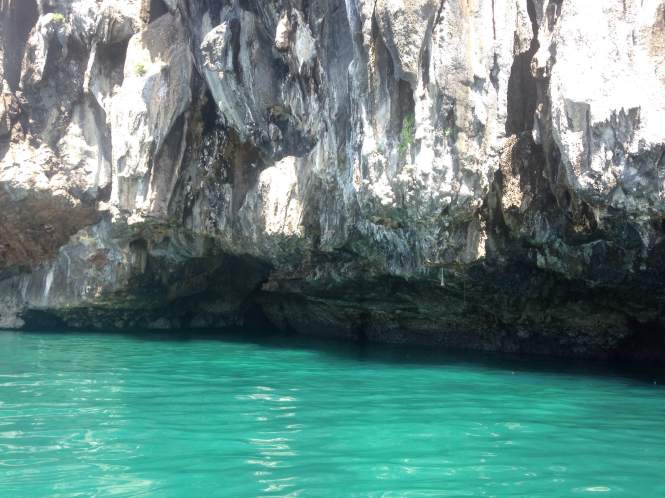
We took the “4 island tour,” which involved a boat ride to two clear-water snorkeling spots, a swim through a tidal cave to a hidden beach inside of an island (think The Beach), and lunch on a different beach, on a different island. Not too shabby.

IMG_4165

The engine on a longtail boat. The engine is connected to a propellor on the end of that long beam. The pilot steers the ship by moving this “long tail” back and forth

Our boat actually broke down at the second snorkeling spot (courtesy of this ^ rusty old engine). One of our guides jumped off and SWAM at least a mile to get help (this same guy was catching fish with his bare hands during our tour— quite a sight). A second longtail was over to assist within 15 minutes, and the practiced seamen had our engine up and running again within another 10.

Not a swimmer? Just take a boat trip!

Cruising around the Andaman Sea in a boat is a fantastic way to spend a day. Huge, sheer rock faces climb out of the sea at almost every turn. As a rock climber, the area ignited my imagination in so many ways. The climbing here would be incredible. You can also just take a boat tour, if you want to see the sights but don’t fancy snorkeling. Just ask any of the tour operators; they’ve got quite a few options, including a visit to the photogenic spots of Koh Phi Phi or James Bond Island, a jutting spire which was featured in The Man With the Golden Gun.

1024px-isla_tapu_phuket_tailandia_2013-08-20_dd_36

James Bond Island

So there you have it: six things to do in Koh Lanta, Thailand! There’s much more certainly (the mangrove forest is worth a visit), but some of the fun of visiting a place is discovering things for yourself.