I write you from the Moab public library – a remarkably good library for such a small town. Town is for resupply: ice cream, burgers, wifi. The rest of the Fall season we spend in the desert — the true desert: long drives, hot days, cold nights, far from service. A good book is essential. A long and involved one, ideally.
Shantaram by Gregory David Roberts
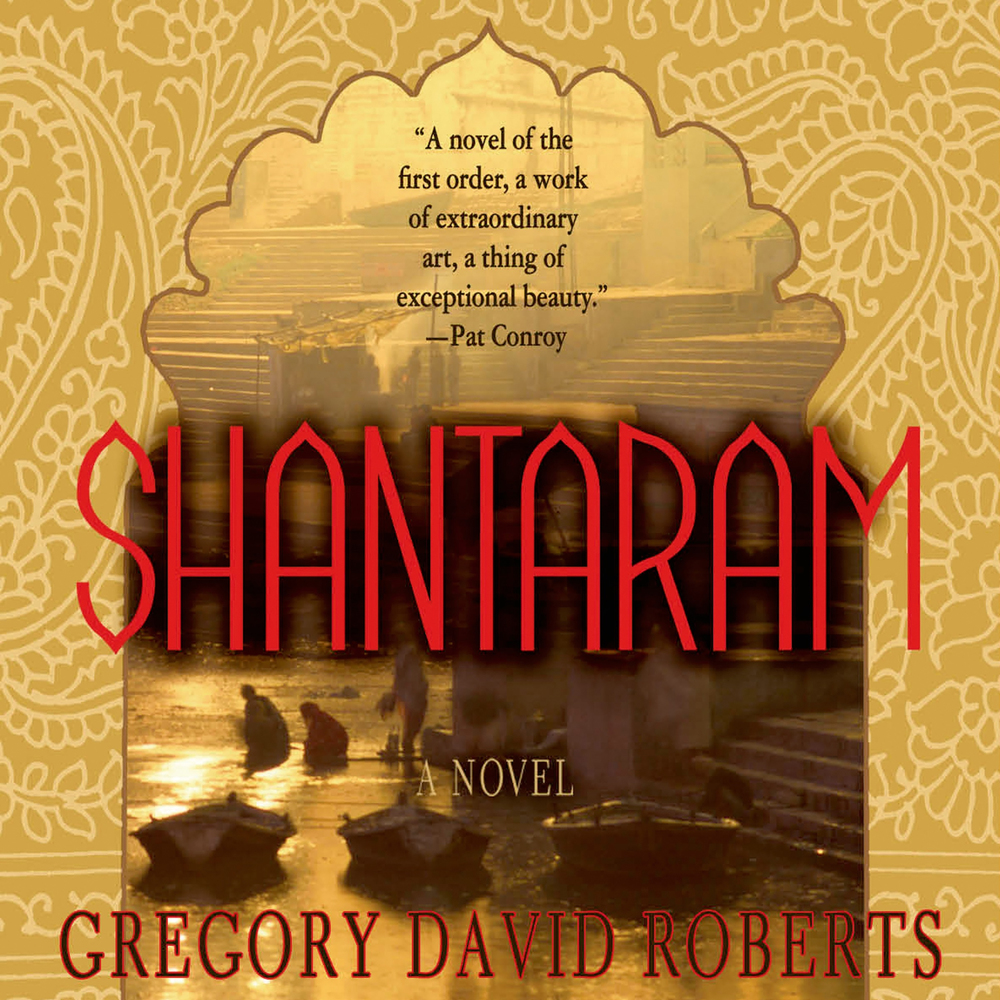
Here in the desert I have been reading Shantaram, a classic travel novel. I first heard of Shantaram in an Eastern European hostel, from a group of Australian travelers. I thought the Aussies, with their penchant for enthusiastic exaggeration, may have oversold it a bit: “It’s this bonkers story of a guy who escapes from Aussie prison, goes on the run in India, he gets in with the mafia, travels all around – and it’s based on the guy’s real life man! It’s nuts!!”
Years later, I’d find a copy of the book in a Squamish thrift shop. For $1, why not?? At 933 pages, that’s a tenth of a cent (Canadian) per page. The book would ride around with me for a year before I finally turned to it in the desert, looking to fill the long sunny rest days which are required if you want to survive a season of very physical climbing out here.
In the end, the Aussies weren’t far off — Shantaram was almost exactly as described. A classic novel of exile, we follow the narrator Linbaba (Lin) into the colorful and crazy world of 1980s Bombay (Mumbai). He quickly falls into the thick of the world’s craziest places: living in a slum; opening a free medical clinic; impersonating an American CIA agent; getting incarcerated again in Indian prison; the wild situations go on and on. The novel has some autobiographical elements, but the plot becomes so fully fantastical that it’s hard to imagine it is all true. Nonetheless, it has the feeling of being a true, lived experience, which is what great fiction offers us.
I’ve never been to India – Nepal is the closest I’ve touched – but after reading this novel, I almost feel as if I have been. Roberts offers a sumptuous, immersive portrait of Bombay — which is only one of India’s many bustling, corrupt, cultured, and cosmopolitan cities. One shivers with greed to imagine what else the huge country holds. It’s not a perfect novel, but it is fun, fascinating, and full-featured. You won’t want to leave.
However, you may want to take a good-sized break before tackling the sequel. Although it didn’t wrap up every thread, I felt that Shantaram ended satisfactorily enough. Reviews seemed mixed on #2. Anybody read it?? Leave a comment.
Apple TV released a TV adaptation of some of the novel – but it’s already been cancelled after one season. So if you want to know how it all goes, you’ll have to stick to the book.
Life and Death Are Wearing Me Out by Mo Yan
This book I chose from a library sale entirely due to the striking visual design of the cover.

Life and Death Are Wearing Me Out is an intergenerational tale of modern China, from the cultural revolution up until the early 2000s (the book was originally published in China in 2006, the English translation released in 2012).
A wildly creative novel, LADAWMO follows one family through the decades of China’s modernization. The narrator of the story is Ximen Nao, a landlord who is killed in the Chinese Communist Revolution. He is reincarnated through the years, coming back first as a donkey, then an ox, a pig, a dog, a monkey, and finally a human baby.
I don’t often read books narrated from the point of view of an animal, and even less frequently books narrated by a reincarnated human soul trapped in an animal. It’s a creative premise and a solid way to anchor the intergenerational story with one voice (although other narrators are utilized, Ximen Nao and his descendants remain at the core of the story).
The Communist Revolution and the Chinese Cultural Revolution are topics which we are not taught of much here in the USA. They are dry, broad, and rooted in deep cultural and political complexities. I cannot say this book clarified the topics for me completely, but it has rubbed a little more frost off the window.
Much like Shantaram, the scale of this book makes it a little intimidating. It seemed well-suited for short bursts of reading, as the chapters are short and relatively independent. The interweaving web of supporting characters in the village can become a little hard to follow, especially as the story progresses through the decades, but thankfully the book includes a glossary of important characters up front, which you can reference at any time.
The themes of the book concern family, culture and country, as well as generational legacy. I’m a little unsure what the exact takeaway is here – maybe I lack the cultural context to understand Mo Yan’s message, or maybe there is no grand takeaway, no master plan – just a lot of small triumphs and tragedies. In the end, that is life, no matter what grand pronouncements the government makes.
In 2012, the same year the English translation of Life and Death Are Wearing Me Out was published, Mo Yan was awarded the Nobel prize. You can read more about his work, his biography and why the Nobel Committee thought his work merited recognition on the Nobel Prize website.
Bonus Book: Our Missing Hearts by Celeste Ng
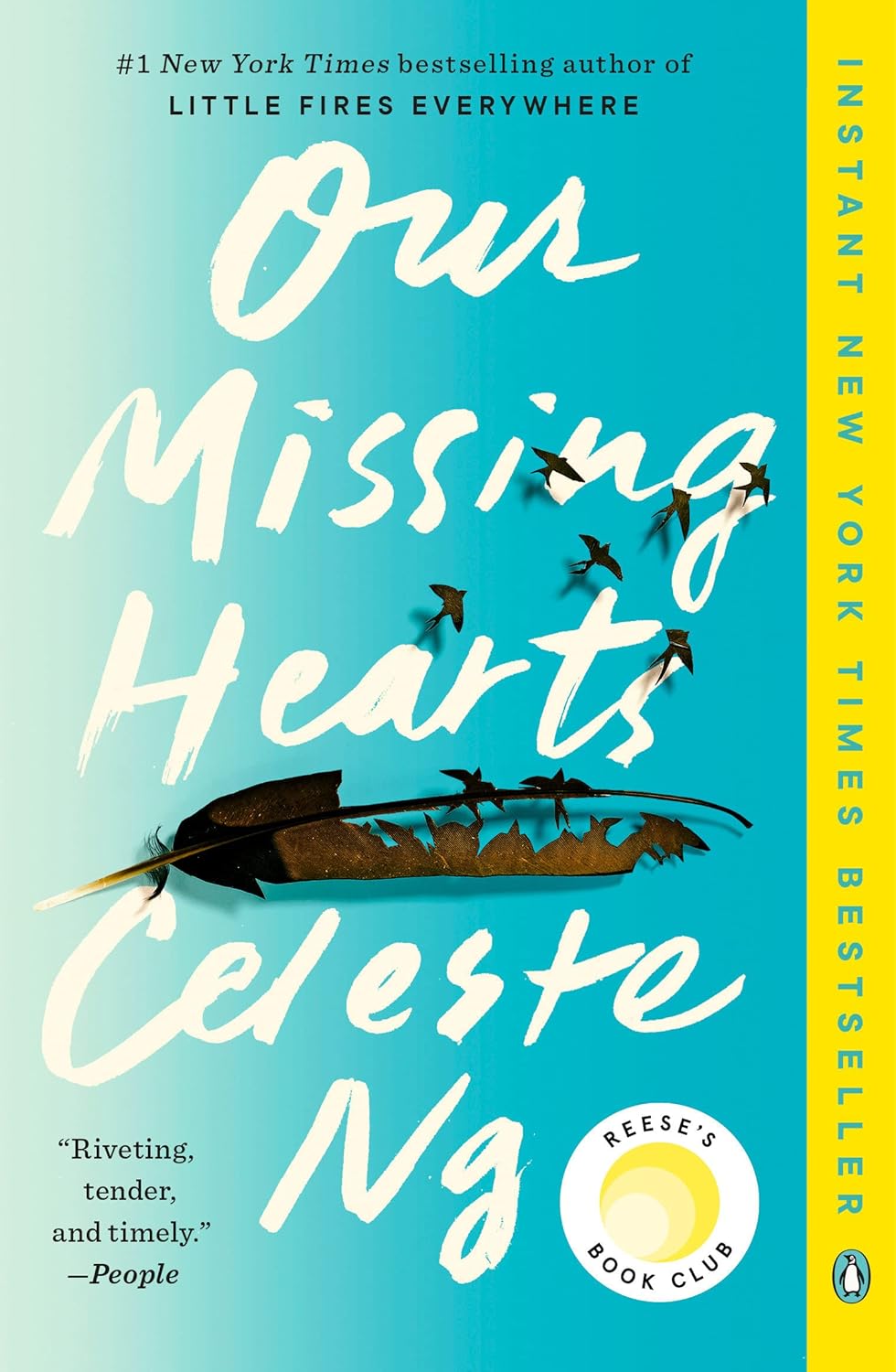
A much tighter construction than the other two works, Our Missing Hearts by Celeste Ng is a near-future speculative fiction novel. Set in a future where the US has suffered a severe economic crisis and much of the blame has been placed on China, It’s much more obviously political outing, concerned with authoritarianism, racism, the freedom of information, and doing what’s right.
But at the heart of it, this is a family story. It’s a touch on the nose, but sometime’s that’s how love is. My mom gave it to me for my birthday, and I think it would connect with any mother or son.
Ng has a talent for sharp dialogue, and the pacing is perfect. Where the previous two books are long, and require a bit of slogging at times, this one zips along apace, a perfect Swiss train of a novel, hitting all the stops on time and letting you leave before you are over it.
Up Next: The Sympathizer by Viet Thanh Nguyen
Guess I’m on a bit of an Asia kick.
Any recommendations? Thoughts on any of these books? Drop ’em in the comments.
This post contains affiliate links. Affiliate links help support this blog.
 thisisyouth